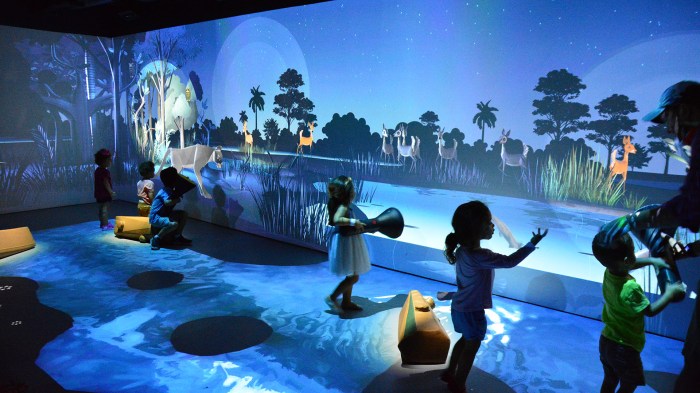
Step into a world where museums come to life! Interactive Museums revolutionize the traditional museum experience by incorporating technology and hands-on activities to captivate visitors of all ages. Get ready to explore the exciting realm of interactive exhibits and discover the endless possibilities they offer for immersive learning and entertainment.
Interactive Museums
Interactive museums are institutions that offer engaging and hands-on experiences for visitors, allowing them to actively participate in the exhibits rather than just observe. These museums differ from traditional ones by incorporating elements that encourage interaction, creativity, and exploration.
Examples of Interactive Elements
- Touchscreen displays where visitors can access additional information or participate in activities
- Motion-sensor games that react to visitors’ movements
- Virtual reality experiences that transport visitors to different places or time periods
- Hands-on exhibits like puzzles, building blocks, or interactive art installations
- Augmented reality apps that provide extra layers of information or storytelling
Benefits of Interactive Museums
Interactive museums offer numerous benefits in engaging visitors and enhancing their learning experiences. By allowing visitors to actively participate, these museums can:
- Enhance visitor engagement and interest by making learning fun and interactive
- Appeal to a wider audience, including children, families, and individuals with different learning styles
- Encourage critical thinking, problem-solving, and creativity through hands-on experiences
- Improve retention and understanding of information through interactive activities and multi-sensory experiences
- Create memorable and immersive experiences that leave a lasting impact on visitors
Types of Interactive Exhibits

Interactive exhibits in museums come in various forms to engage visitors of all ages. These exhibits help make learning fun and memorable by allowing participants to actively participate in the experience.
Touchscreens
Touchscreen exhibits are common in museums and allow visitors to interact with digital content by touching the screen. Users can navigate through information, videos, and images at their own pace, making the learning experience more engaging.
Virtual Reality
Virtual reality exhibits transport visitors to different worlds, time periods, or scenarios through immersive technology. Users can explore historical sites, experience simulations, and interact with virtual objects, providing a unique and captivating experience.
Hands-On Activities
Hands-on activities involve physical interaction with exhibit materials, allowing visitors to touch, manipulate, and experiment with various objects. These interactive exhibits cater to kinesthetic learners and provide a tactile learning experience that enhances understanding and retention.
Compare and Contrast
- Touchscreens offer easy access to information but may lack the immersive experience of virtual reality.
- Virtual reality provides a fully immersive experience but may require additional equipment and setup.
- Hands-on activities engage multiple senses and promote active learning but may require more supervision to ensure proper use.
Technology in Interactive Museums
Technology plays a pivotal role in shaping the interactive experiences offered by museums. From augmented reality to artificial intelligence, these technological advancements have revolutionized how visitors engage with exhibits and learn about history and culture.
Integration of Augmented Reality
Augmented reality (AR) has transformed the way visitors interact with museum exhibits. By superimposing digital content onto the real world, AR enhances the overall experience and provides a deeper understanding of the subject matter. For example, visitors can use AR apps to see 3D models of ancient artifacts or historical events overlaid on their surroundings, bringing history to life in a unique and engaging way.
Utilization of Artificial Intelligence
Artificial intelligence (AI) has been integrated into interactive exhibits to provide personalized and immersive experiences for visitors. AI-powered chatbots can answer questions, provide additional information, and even tailor the experience based on the visitor’s interests. This technology allows museums to engage with visitors on a more interactive level, creating a dynamic and adaptive learning environment.
Evolution of Interactive Museums
Over the years, technology advancements have significantly influenced the evolution of interactive museums. From touch-screen displays to immersive virtual reality experiences, museums have continuously adapted to incorporate the latest technologies to enhance visitor engagement. As technology continues to advance, interactive museums will likely further evolve to provide even more immersive and interactive experiences for visitors of all ages.
Educational Value of Interactive Museums
Interactive museums play a crucial role in providing a more engaging and immersive learning experience for visitors. By incorporating interactive elements, these museums create opportunities for hands-on exploration and deeper understanding of various subjects.
Enhanced Knowledge Retention
- Interactive exhibits allow visitors to actively participate in the learning process, leading to better retention of information.
- Engaging multiple senses through interactive experiences helps in reinforcing learning and memory retention.
- For example, a science museum with interactive displays on electricity can help visitors understand complex concepts through hands-on experiments, leading to better retention of scientific principles.
Promoting Curiosity and Lifelong Learning
- Interactive museums spark curiosity in visitors by encouraging exploration and discovery through interactive exhibits.
- By promoting active engagement, these museums inspire a love for learning that extends beyond the visit, fostering a culture of lifelong learning.
- For instance, a history museum with interactive storytelling exhibits can ignite curiosity about the past and encourage visitors to delve deeper into historical events outside the museum setting.
Accessibility and Inclusivity
Ensuring that interactive museums are accessible to individuals with disabilities is crucial to providing an enriching experience for all visitors. By implementing strategies that promote inclusivity, museums can create a welcoming environment for everyone, regardless of their abilities.
Universal Design Principles
Implementing universal design principles in the development of interactive exhibits is key to ensuring accessibility for visitors with diverse needs. These principles focus on creating spaces and experiences that can be easily used and understood by individuals with varying abilities. By incorporating features such as clear signage, tactile elements, audio descriptions, and adjustable settings, museums can cater to a wide range of visitors and make their exhibits more inclusive.
- Provide multiple modes of interaction: Offering different ways for visitors to engage with exhibits, such as touchscreens, audio guides, tactile models, and sign language interpreters, can accommodate various needs and preferences.
- Ensure physical access: Creating barrier-free spaces with ramps, elevators, and wide pathways allows visitors with mobility impairments to navigate the museum independently.
- Offer sensory-friendly experiences: Considering the sensory sensitivities of individuals with autism or sensory processing disorders, museums can design exhibits with controlled lighting, quiet areas, and interactive elements that are gentle on the senses.
Amusements and Attractions
Amusements and attractions play a crucial role in enriching the overall visitor experience at interactive museums. By incorporating engaging activities and attractions, museums can create a fun and memorable environment for visitors of all ages.
Interactive Games and Challenges
- Interactive games and challenges offer a hands-on approach to learning and exploration. Visitors can test their knowledge, problem-solving skills, and creativity through various game-based activities.
- Examples include scavenger hunts, puzzles, trivia games, and digital simulations that encourage active participation and engagement.
Virtual Reality Experiences
- Virtual reality (VR) experiences provide an immersive and interactive way for visitors to explore historical events, scientific concepts, or fictional worlds. By putting on a VR headset, visitors can feel like they are part of the exhibit itself.
- Virtual tours, educational simulations, and interactive storytelling are some of the ways VR technology can enhance the museum experience.
Live Demonstrations and Performances
- Live demonstrations and performances bring exhibits to life by showcasing real-time experiments, reenactments, or artistic presentations. Visitors can witness firsthand the practical applications of the concepts they have learned.
- Science experiments, historical reenactments, musical performances, and theatrical presentations are examples of live attractions that can captivate and entertain museum-goers.
Conclusion
Dive into the world of Interactive Museums and experience a fusion of education and entertainment like never before. From augmented reality to inclusive design, these museums are paving the way for a more engaging and accessible future in the world of art and culture. Get ready to embark on a journey of discovery and wonder at Interactive Museums near you!
FAQ Resource
What makes interactive museums different from traditional museums?
Interactive museums engage visitors through hands-on activities and technology, creating a more immersive and dynamic experience compared to passive observation in traditional museums.
How do interactive exhibits cater to diverse audiences?
Interactive exhibits cater to diverse audiences by offering various engagement levels, from touchscreens for tech-savvy visitors to hands-on activities for tactile learners, ensuring an inclusive experience for all.
What role does technology play in shaping interactive museum experiences?
Technology enhances interactive museum experiences by introducing elements like augmented reality and artificial intelligence, providing innovative ways to interact with exhibits and learn.
:max_bytes(150000):strip_icc()/san-diego-zoo-penguins_WORLDZOO1122-9dfc5dca590b4d309df2eb222735b143.jpg?w=700)